On this page
DIRECT ANSWER
What the player needs to know
Read direction before chasing damage
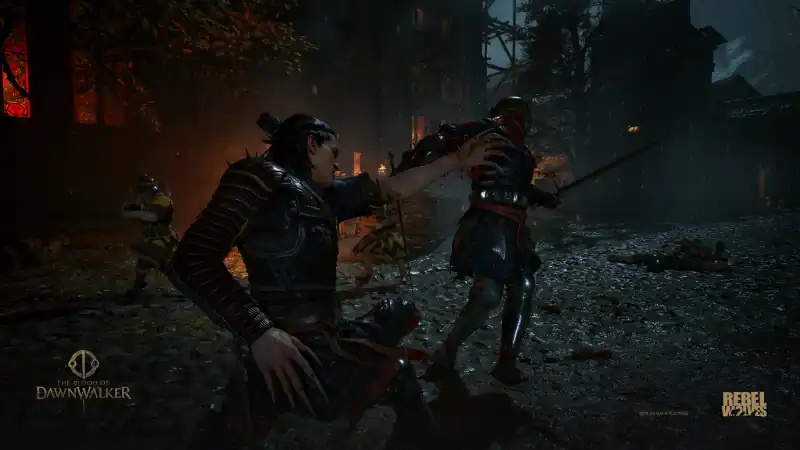
The defining melee layer is directional. An incoming strike communicates an angle; the player chooses a corresponding defensive response and can answer with directionally selected offense. That makes recognition and timing foundational skills before weapon or perk comparisons matter.
Use the optional slow-motion aid if the selection step is the problem. A clean training test should separate input recognition, timing and character statistics rather than calling every failed block a weak build.
- Watch the attack line, not only the enemy body.
- Confirm the chosen block direction before timing conclusions.
- Change one difficulty or assist variable at a time.
Three paths, one encounter
Swordmastery develops weapon technique. Witchcraft adds learned supernatural tools. Vampirism grows through Coen’s night identity, feeding and corruption. Official descriptions position them as connected options rather than three isolated classes selected at character creation.
A useful build will state which form, resource and encounter it solves. Pre-release lists cannot compare damage, crowd control or opportunity cost because complete values and acquisition routes are not yet available.
| Path | Confirmed identity |
|---|---|
| Swordmastery | Directional weapon technique and martial growth |
| Witchcraft | Learned magical skills and manuals |
| Vampirism | Night powers tied to feeding and corruption |
Where to go next
Use the directional guide for parry logic, the skill guide for progression and the weapon page for confirmed categories. Keeping those questions separate prevents a broad combat page from burying the exact answer a player needs.
Retail combat testing will start without purchased skills so input behavior is not confused with progression. The audit will record control presets, camera and lock-on behavior, defense feedback, resources and the earliest access to each power path. Damage comparisons will use the same weapon, opponent, difficulty and patch. A technique shown in a trailer will enter the control guide only when its input and result can be repeated, and any broad build recommendation will link to the exact skills and acquisition route it assumes.
Frequently asked questions
Is combat like a standard action RPG?
It is an action RPG, but the announced directional attacks and blocks are a distinctive central layer.
What are Omniattack and Omniblock?
Those search terms refer to control assistance around directional inputs; exact labels and behavior should be checked in the launch settings before definitive instructions are published.
REFERENCE RECORD
Sources used for this page
Understand Dawnwalker’s attack directions, matching defense and optional slow motion while exact parry frames remain reserved for launch testing.